
Introduction
Choosing the right elevator system for your building is a crucial decision that directly impacts safety, performance, long-term maintenance, and overall project cost. Whether you are planning a residential property, a commercial complex, or a healthcare facility, selecting the most suitable lift technology requires careful evaluation of factors such as building height, usage frequency, space availability, and budget. One of the most preferred solutions for low-rise buildings today is the hydraulic passenger lift, known for its smooth operation, reliable performance, and cost-effectiveness. Unlike conventional traction systems, hydraulic lifts operate with a simpler mechanism, making them easier to install and maintain, especially in structures with limited headroom. These systems are widely used across residential and commercial environments due to their stability, safety, and ability to handle varying load capacities efficiently. In this guide, we will help you understand everything about hydraulic passenger lift systems, including how they work, their key advantages, practical applications, and how to choose the right solution that aligns with your building requirements and long-term operational goals.
What is a Hydraulic Passenger Lift?
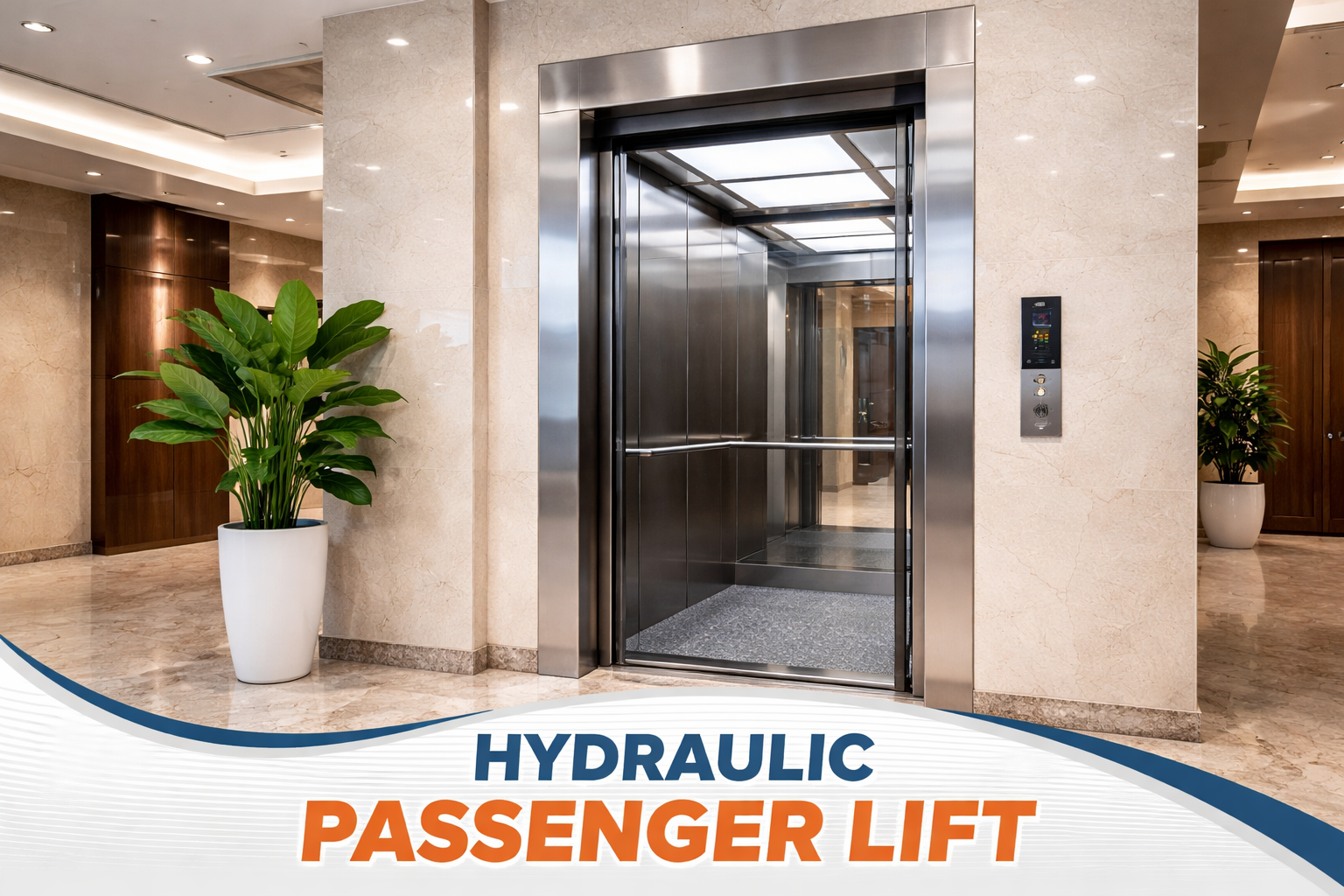
A hydraulic passenger lift is an elevator system that operates using hydraulic pressure to move the lift car between floors. Instead of cables and counterweights (used in traction lifts), hydraulic elevators rely on a piston powered by fluid pressure.
These lifts are especially suitable for:
-
Low-rise buildings (2–6 floors)
-
Residential properties (villas, apartments)
-
Small commercial spaces
-
Hospitals and institutions
Their simple mechanism makes them a practical and efficient choice for projects where space and budget are important factors.
How Do Hydraulic Lift Systems Work?
Hydraulic lift systems function using a hydraulic power unit, which includes a pump, fluid reservoir, and control valves.
Working Process:
-
The pump pushes hydraulic fluid into a cylinder
-
The pressure moves the piston upward
-
The lift car rises smoothly
-
To descend, the fluid is released back into the reservoir
This system ensures:
-
Controlled speed
-
Smooth acceleration and stopping
-
Stable vertical movement
Residential vs Commercial Hydraulic Lift Use
Residential Hydraulic Lift
Hydraulic lifts are highly popular in homes due to:
-
Compact design
-
Quiet operation
-
Easy installation
-
Low maintenance
They are ideal for:
-
Villas and duplex homes
-
Independent houses
-
Elder-friendly homes
Also known as home elevator systems, these lifts improve accessibility and convenience.
Commercial Hydraulic Lift
For commercial buildings, hydraulic lifts offer:
-
Reliable daily performance
-
Cost-effective installation
-
Strong load capacity
They are widely used in:
-
Office buildings
-
Retail shops
-
Hotels
-
Institutional buildings
These are often categorized under commercial building lifts.
Key Benefits of Hydraulic Passenger Lift Systems
1. Smooth & Comfortable Ride
Hydraulic systems provide smooth, jerk-free movement with controlled acceleration and deceleration, ensuring a comfortable and stable travel experience for passengers, which is especially important in residential buildings, hospitals, and low-rise commercial spaces.
2. Cost-Effective Solution
Hydraulic passenger lifts have a lower initial installation cost compared to traction systems due to their simpler design and fewer components. This makes them an ideal choice for budget-conscious residential and commercial projects without compromising on performance or safety.
3. Low Maintenance Requirements
With fewer moving parts and a straightforward operating mechanism, hydraulic lifts experience less wear and tear, resulting in reduced maintenance needs, lower servicing costs, and improved long-term reliability.
4. Space Efficiency & Flexible Installation
Hydraulic lifts do not require a machine room above the shaft, making them suitable for buildings with limited headroom or structural constraints. Their flexible design allows easy integration into both new constructions and existing buildings.
5. High Load Capacity
These lifts are capable of handling higher load capacities efficiently, making them suitable for heavy-duty passenger lifts in commercial buildings, hospitals, and institutions where consistent performance under load is essential.
6. Safe & Reliable Operation
Hydraulic passenger lift systems are equipped with advanced safety features such as emergency lowering, overload protection, and controlled descent mechanisms. They are designed in compliance with standards like BIS and EN81, ensuring maximum passenger safety and dependable operation.
When Should You Choose a Hydraulic Lift?
A hydraulic passenger lift system is the right choice when:
-
Your building is up to 4–6 floors
-
You have limited headroom
-
You want a cost-effective solution
-
Smooth ride comfort is a priority
-
Maintenance simplicity is important
Hydraulic Lift vs Traction Lift (Important Comparison)
|
Feature |
Hydraulic Lift |
Traction Lift |
|
Best for |
Low-rise buildings |
High-rise buildings |
|
Installation Cost |
Lower |
Higher |
|
Maintenance |
Low |
Moderate |
|
Speed |
Moderate |
High |
|
Space Requirement |
Less |
More |
|
Ride Quality |
Smooth |
Very smooth |
Conclusion:
If your project is low-rise and budget-focused, a hydraulic passenger lift is usually the better option.
Hydraulic Elevator Installation Services
Professional hydraulic elevator installation services play a key role in performance and safety.
What to Expect:
-
Site inspection and planning
-
Customized lift design
-
Professional installation
-
Testing and commissioning
A well-installed system ensures:
-
Long lifespan
-
Safe operation
-
Minimal downtime
Maintenance & Long-Term Performance
Hydraulic lifts require basic but essential maintenance:
-
Oil level checks
-
Hydraulic system inspection
-
Safety system testing
-
Routine servicing
With proper care, these lifts offer:
-
Long service life
-
Consistent performance
-
Reduced repair costs
How to Choose the Right Hydraulic Lift Manufacturer
Choosing the right hydraulic lift manufacturer is critical for long-term success.
Look for:
-
Industry experience
-
Certified safety standards
-
Customization options
-
Strong service support
-
Transparent pricing
A reliable custom hydraulic passenger lift manufacturer will:
-
Understand your project needs
-
Offer tailored solutions
-
Provide installation and maintenance support
Applications of Hydraulic Passenger Lifts
Hydraulic lifts are widely used in:
-
Residential buildings
-
Commercial complexes
-
Hospitals and clinics
-
Hotels and guest houses
-
Educational institutions
Their flexibility makes them suitable for multiple industries.
FAQs – Hydraulic Passenger Lift Systems
1. Is a hydraulic passenger lift suitable for homes?
Yes, hydraulic lifts are ideal for residential use due to their compact design, smooth and quiet operation, and easy installation. They are especially suitable for villas, duplex homes, and low-rise buildings where space and comfort are important considerations.
2. What is the cost of a hydraulic lift?
The cost depends on factors such as load capacity, number of floors, cabin design, and customization requirements. However, hydraulic lifts are generally more affordable than traction lifts due to simpler technology and lower installation complexity, making them a cost-effective choice for low-rise projects.
3. Are hydraulic lifts safe?
Yes, modern hydraulic lifts are equipped with advanced safety features such as emergency lowering systems, overload protection, door interlocks, and backup controls. They are manufactured in compliance with safety standards like BIS and EN81, ensuring reliable and secure operation.
4. Which is better: hydraulic or traction lift?
For low-rise buildings, hydraulic lifts are more cost-effective, easier to maintain, and practical. Traction lifts are better suited for high-rise buildings where higher speed and efficiency over long distances are required, so the choice depends on building height and usage.
5. Do hydraulic lifts consume more electricity?
Hydraulic lifts consume power mainly during upward travel, while descent is gravity-assisted, which helps in reducing overall energy usage. For low-rise buildings with moderate usage, they are considered energy-efficient and economical.
Conclusion
A hydraulic passenger lift system stands out as a practical, reliable, and cost-effective solution for both residential and commercial buildings, particularly where low-rise structures and efficient space utilization are key considerations. Its smooth and jerk-free performance, combined with lower installation complexity and minimal maintenance requirements, makes it a preferred choice for builders, property owners, and developers looking for long-term value. Additionally, the ability of hydraulic systems to operate efficiently under consistent daily usage while maintaining safety standards adds to their overall dependability. Whether you are planning a home elevator to enhance accessibility or a commercial lift system to support the regular movement of people, understanding your building’s structural needs, expected traffic, and operational priorities is essential to making the right investment. Choosing a well-designed hydraulic lift not only improves convenience and mobility but also contributes to the overall functionality and value of your property.
Need Expert Guidance?
If you are planning to install a hydraulic lift, it is important to consult experienced professionals who can assess your building structure, usage requirements, and technical constraints to recommend the most suitable solution. A reliable expert will help you select the right capacity, design, and configuration while ensuring compliance with safety standards and efficient performance over time. Partnering with a trusted hydraulic passenger lift supplier ensures that you receive not only a high-quality product but also end-to-end support, including proper installation, regular maintenance, and long-term service reliability. By making an informed decision with professional guidance, you can ensure that your elevator system delivers safety, efficiency, and durability tailored to your specific project needs.